
1. Úvod
This manual provides essential information for the proper installation, operation, and maintenance of the L90-CSDC 12V 30A PCB Mountable Relay. Please read this manual thoroughly before using the product to ensure safe and efficient operation.
2. Konec produktuview
The L90-CSDC is a high-quality, PCB mountable, single-pole double-throw (SPDT) relay designed for controlling high current AC or DC loads with a low-power signal. Relays function as electrically operated switches, providing isolation between the control circuit and the load circuit. This specific model is capable of handling up to 12V DC voltage a 30 Amps of current, making it suitable for a wide range of industrial and scientific applications, including robotics.
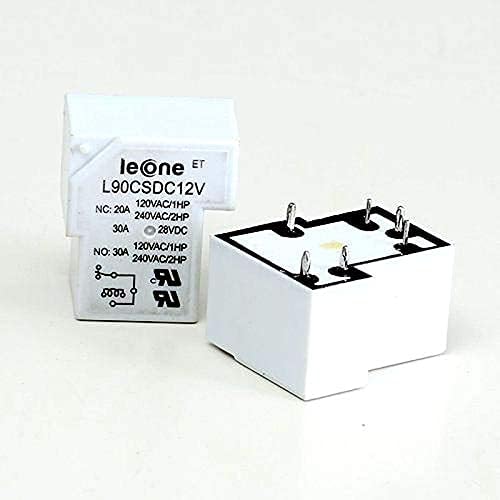
Figure 1: L90-CSDC 12V 30A PCB Mountable Relay. This image shows the white rectangular relay module with its pins visible on the underside, designed for mounting onto a Printed Circuit Board (PCB). The top surface displays the model number "L90CSDC12V" and electrical ratings.
3. Klíčové vlastnosti
- Coil Voltage: 12 V DC
- Aktuální hodnocení kontaktu: Až do 30 Amps
- Konfigurace kontaktu: SPDT (jednopólový dvoupolohový)
- Typ montáže: PCB Mountable (Chassis Mount)
- Materiál: Steel contacts
- Provozní režim: Automatické přepínání
4. Technické specifikace
| Specifikace | Hodnota |
|---|---|
| Značka | Generic (Manufactured by iBAT Solutions) |
| Číslo modelu | 5156468J GHCGDTR |
| Coil Voltage | 12 V DC |
| Aktuální hodnocení | 30 Amps |
| Maximální spínací proud | 30 Amps |
| Maximum Switching Voltage | 12 Volts DC (also rated for AC loads as per product image: 120VAC/1HP, 240VAC/2HP) |
| Typ kontaktu | Normally Closed (NC) and Normally Open (NO) - SPDT |
| Kontaktní materiál | Ocel |
| Typ montáže | Chassis Mount (PCB Mountable) |
| Typ konektoru | Clamp (referring to the pins for PCB connection) |
| Rozměry produktu (DxŠxV) | 2 x 2 x 2 cm (20 x 20 x 20 milimetrů) |
| Hmotnost položky | 2 g |
| Země původu | Indie |
5. Instalační příručka
The L90-CSDC relay is designed for PCB (Printed Circuit Board) mounting. Proper installation is crucial for reliable operation and safety.
5.1. Bezpečnostní opatření
- Always disconnect power to the circuit before installing or removing the relay.
- Ensure that the relay's voltage and current ratings match or exceed the requirements of your application.
- Používejte vhodné osobní ochranné prostředky (OOP), jako jsou ochranné brýle.
- If you are unsure about any aspect of the installation, consult a qualified electrician or electronics technician.
5.2. Mounting on PCB
- Identify the correct pin orientation on your PCB. The relay has multiple pins for the coil and the contacts (Common, Normally Open, Normally Closed). Refer to the pinout diagram usually provided on the relay's datasheet or the relay body itself (as seen in Figure 1, showing NC, NO, and coil symbols).
- Carefully align the relay pins with the corresponding holes on the PCB.
- Gently push the relay into place until it sits flush with the PCB surface.
- Solder the relay pins to the PCB pads using appropriate soldering techniques. Ensure good solder joints for reliable electrical connection.
5.3. Připojení vodičů
The L90-CSDC is an SPDT relay, meaning it has one common contact (COM), one normally open contact (NO), and one normally closed contact (NC), in addition to the coil terminals.
- Svorky cívky: Connect your 12V DC control signal across these terminals. When 12V DC is applied, the coil energizes.
- Common (COM) Terminal: This is the input for the circuit you want to switch.
- Normally Open (NO) Terminal: This contact is open (no connection) when the coil is de-energized and closes when the coil is energized.
- Normally Closed (NC) Terminal: This contact is closed (connected to COM) when the coil is de-energized and opens when the coil is energized.
Always verify the pinout on the relay itself or its datasheet for precise connections.
6. Principy provozu
A relay operates on the principle of electromagnetism. When an electrical current flows through the relay's coil, it generates a magnetic field. This magnetic field attracts an armature, causing it to move and change the state of the electrical contacts.
- Stav bez napětí: Když není zvtage is applied to the 12V DC coil, the Common (COM) contact is connected to the Normally Closed (NC) contact. The Normally Open (NO) contact remains disconnected from COM.
- Stav pod napětím: When 12V DC is applied to the coil, the magnetic field pulls the armature. This causes the Common (COM) contact to disconnect from the Normally Closed (NC) contact and connect to the Normally Open (NO) contact.
This mechanism allows a low-power control signal (12V DC for the coil) to switch a much higher power circuit (up to 30 Amps AC or DC) safely and efficiently.
7. Údržba a péče
The L90-CSDC relay is a robust electronic component designed for long-term reliability. Minimal maintenance is required, but following these guidelines can extend its lifespan:
- Udržujte v čistotě: Ensure the relay and its surrounding area are free from dust, dirt, and moisture. Use a soft, dry cloth for cleaning.
- Podmínky prostředí: Operate the relay within its specified temperature and humidity ranges. Avoid extreme conditions.
- Vyvarujte se přetížení: Nepřekračujte maximální proud a objtage ratings. Overloading can cause premature failure and safety hazards.
- Kontrola připojení: Periodically check solder joints and wiring connections for looseness or corrosion, especially in high-vibration environments.
- Kontaktní opotřebení: Over time, the contacts may experience wear, especially when switching inductive loads or high currents frequently. If erratic behavior or arcing is observed, the relay may need replacement.
8. Řešení problémů
If you encounter issues with your L90-CSDC relay, consider the following common troubleshooting steps:
| Problém | Možná příčina | Řešení |
|---|---|---|
| Relay does not click/energize when control voltage se aplikuje. |
|
|
| Load does not switch on/off. |
|
|
| Relay makes buzzing noise. |
|
|
9. Bezpečnostní informace
Always adhere to general electrical safety practices when working with relays and electrical circuits:
- Never work on live circuits. Always disconnect power before making or breaking connections.
- Ensure proper insulation for all wires and connections.
- Use appropriate circuit protection (fuses, circuit breakers) for both the control and load circuits.
- Do not use the relay in environments where it may be exposed to flammable gases, liquids, or excessive moisture unless specifically rated for such conditions.
- Elektronický odpad zlikvidujte zodpovědně v souladu s místními předpisy.
10. Záruka a podpora
For warranty information or technical support regarding your L90-CSDC 12V 30A PCB Mountable Relay, please contact the manufacturer, iBAT Solutions, or your point of purchase. Please have your model number (5156468J GHCGDTR) and purchase details ready when contacting support.
Manufacturer: iBAT Solutions
Země původu: Indie