
SnowAir QPGJ-49
Uživatelská příručka
Portable TPMS Tire Pressure Sensor
Brand: SnowAir
Model: QPGJ-49
Zavedení
This manual provides essential information for the proper installation, operation, and maintenance of your SnowAir Portable TPMS (Tire Pressure Monitoring System) Tire Pressure Sensor. This sensor is designed as a replacement part for specific Chrysler, Dodge, and Jeep vehicles manufactured between 2005 and 2014, with part numbers 56029526AA and 68078861AC. Please read this manual thoroughly before attempting any installation or use to ensure safety and optimal performance.
Bezpečnostní informace
Vždy dodržujte následující bezpečnostní pokyny:
- Doporučená profesionální instalace: Installation of TPMS sensors requires specialized tools and knowledge. It is highly recommended that installation be performed by a qualified automotive technician.
- Správný točivý moment: Ensure that the sensor is installed with the correct torque specifications to prevent damage to the sensor or the wheel. Refer to your vehicle's service manual for specific torque values.
- Kompatibilita vozidla: Verify that this sensor is compatible with your specific vehicle make, model, and year before installation. Incompatible sensors may not function correctly.
- Tire Deflation/Inflation: Exercise caution when deflating and inflating tires. Always use appropriate safety equipment and follow standard tire service procedures.
- Programování senzorů: After installation, the new TPMS sensor(s) must be programmed or relearned to the vehicle's TPMS system. This often requires a specialized TPMS scan tool.
Konec produktuview
The SnowAir TPMS sensor is a critical component of your vehicle's tire pressure monitoring system, designed to accurately measure and transmit tire pressure data to your vehicle's onboard computer. This helps alert the driver to under-inflated tires, improving safety and fuel efficiency.
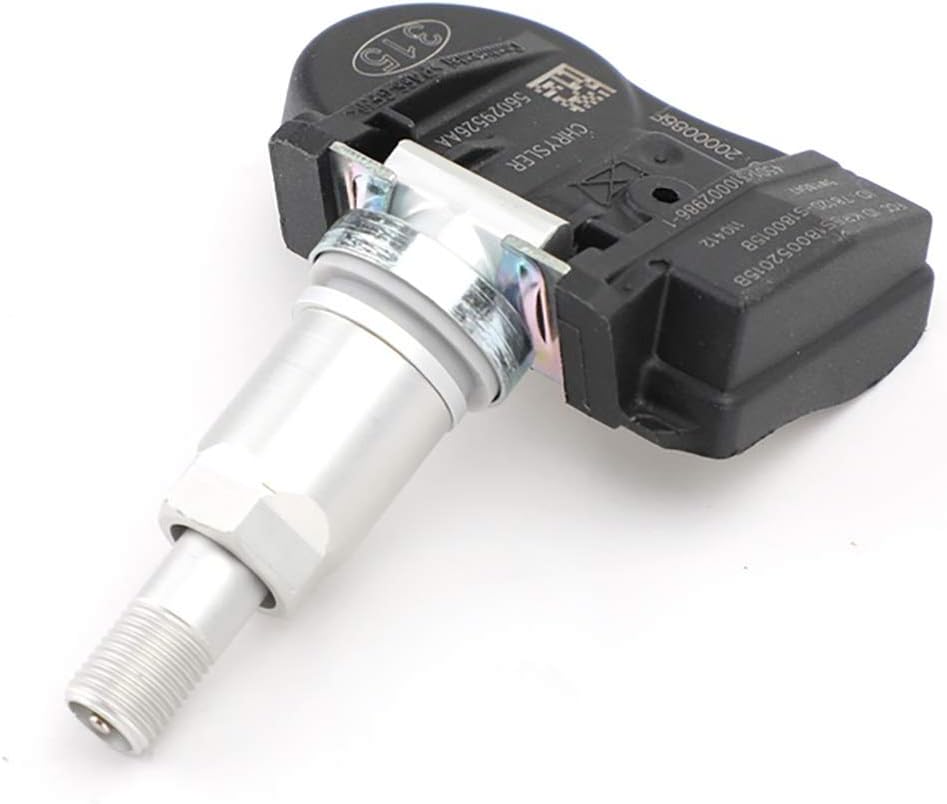
Obrázek 1: Hlavní view of the SnowAir TPMS sensor, showing the valve stem and the sensor body with markings.

Obrázek 2: Nahoru view of the sensor body, displaying FCC ID, part numbers (56029526AA), and the Chrysler brand marking, along with the 315 MHz frequency indicator.

Obrázek 3: Detailní záběr view of the aluminum valve stem, showing the threaded portion for the valve cap and the internal valve core.
Průvodce instalací
Kontroly před instalací
- Confirm the sensor's compatibility with your vehicle's make, model, and year.
- Ensure you have all necessary tools, including a tire changer, valve stem tool, torque wrench, and a TPMS scan tool.
- Inspect the new sensor for any visible damage before installation.
Installation Steps (Professional Installation Recommended)
- Vyfoukněte pneumatiku: Completely deflate the tire from which the old sensor will be removed.
- Demontáž starého senzoru: Carefully remove the tire from the wheel. Unscrew the retaining nut or bolt holding the old TPMS sensor to the wheel rim and remove the sensor.
- Instalace nového senzoru: Insert the new SnowAir TPMS sensor through the valve stem hole from the inside of the wheel. Ensure the sensor body is correctly oriented within the wheel.
- Secure Sensor: Hand-tighten the retaining nut or bolt onto the valve stem from the outside of the wheel. Then, use a torque wrench to tighten it to the vehicle manufacturer's specified torque (typically between 4 Nm and 8 Nm, but always refer to your vehicle's service manual).
- Mount Tire: Carefully remount the tire onto the wheel, taking care not to damage the sensor.
- Nafouknout pneumatiku: Nahustěte pneumatiku na tlak doporučený výrobcem vozidla.
- Sensor Programming/Relearn: After installation, the vehicle's TPMS system must be updated to recognize the new sensor. This process, known as 'relearn' or 'programming', varies by vehicle model and typically requires a specialized TPMS scan tool. Follow your vehicle's specific relearn procedure.
Operace
Once properly installed and programmed, the SnowAir TPMS sensor will continuously monitor the air pressure within its respective tire. This data is wirelessly transmitted to the vehicle's TPMS receiver. If a tire's pressure falls below a predetermined threshold, the TPMS warning light on your vehicle's dashboard will illuminate, alerting you to a low tire pressure condition. Some vehicles may also display the specific tire pressure on the instrument cluster.
It is important to note that the TPMS system is a safety feature and not a substitute for regular manual tire pressure checks. Always ensure your tires are inflated to the pressure recommended by your vehicle manufacturer, typically found on a sticker inside the driver's side door jamb or in the owner's manual.
Údržba
- Regular Tire Pressure Checks: Even with a TPMS, manually check your tire pressure monthly using a reliable gauge.
- Valve Stem Caps: Ensure valve stem caps are always in place to prevent dirt and moisture from entering the valve.
- Životnost senzoru: TPMS sensors are battery-powered. The battery is sealed within the sensor and is not replaceable. The typical lifespan of a TPMS sensor battery is 5-10 years, depending on usage and environmental conditions. When the battery depletes, the sensor will need to be replaced.
- Tire Service: Inform your tire technician that your vehicle is equipped with TPMS sensors before any tire service (e.g., rotation, repair, replacement) to ensure proper handling and prevent damage to the sensors.
Odstraňování problémů
If you experience issues with your TPMS system, consider the following common scenarios:
| Příznak | Možná příčina | Řešení |
|---|---|---|
| TPMS warning light is on. | Nízký tlak v pneumatice. | Check all tire pressures with a gauge and inflate to recommended levels. The light should turn off after driving. |
| TPMS warning light is flashing, then stays solid. | TPMS system malfunction (e.g., dead sensor battery, sensor failure, system error). | Have the TPMS system diagnosed by a qualified technician using a TPMS scan tool. Sensors may need replacement or reprogramming. |
| New sensor installed, but TPMS light remains on. | Sensor not properly programmed/relearned to the vehicle. | Perform the correct TPMS relearn procedure for your vehicle. This often requires a specialized TPMS tool. |
| Incorrect pressure readings. | Faulty sensor, incorrect programming, or external interference. | Verify tire pressure with a calibrated gauge. Re-program the sensor. If issues persist, the sensor may be faulty and require replacement. |
Specifikace
| Atribut | Hodnota |
|---|---|
| Značka | SnowAir |
| Číslo modelu | QPGJ-49 |
| Rozměry položky (D x Š x V) | 2.95 x 1.97 x 0.59 palce |
| Hmotnost položky | 0.26 libry (přibližně 4.2 uncí) |
| Styl | Přenosný |
| Typ montáže | Přírubová montáž |
| Specifické použití pro produkt | Sledování tlaku |
| Kompatibilní čísla dílů | 56029526AA, 68078861AC |
Informace o záruce
SnowAir products are manufactured to high-quality standards. This product comes with a limited warranty against defects in materials and workmanship under normal use. Please retain your proof of purchase. For specific warranty terms and conditions, please refer to the warranty card included with your product or contact customer support.
Zákaznická podpora
If you have any questions, require technical assistance, or need to report an issue with your SnowAir TPMS sensor, please contact our customer support team. Provide your product model number (QPGJ-49) and details of your inquiry for faster service.
E-mail: support@snowair.com (example)
Telefon: 1-800-XXX-XXXX (např.ample)
Webmísto: www.snowair.com (example)
Ask a question about this manual
Ask about setup, troubleshooting, compatibility, parts, safety, or missing instructions. Manuals+ will review the question and use this page’s manual context to help answer it.